
Resilient Urban Drainage Management in West Tehran - ﺁﺯﻣﺎﯾشگاه پژوهشی پایش و پیش بینی هیدرولوژیکی و هواشناسی
Resilient Management of Urban Drainage Systems in Western Tehran
Project Overview
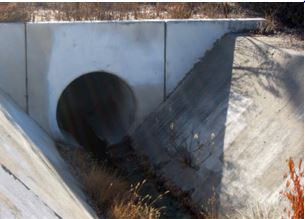
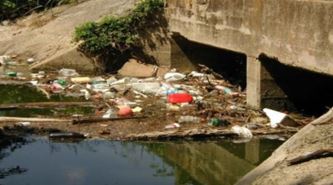
Urban development and the expansion of impervious surfaces alter the natural patterns of water movement and infiltration, resulting in greater volumes and longer durations of surface runoff. Under such conditions, conventional drainage systems may lack sufficient capacity to convey runoff effectively, increasing the likelihood of urban flooding, higher peak discharges, deterioration of runoff quality, and the transport of pollutants.
The project entitled “Resilient Management of Urban Drainage Systems in Western Tehran” focuses on evaluating innovative approaches to stormwater management and restoring urban drainage performance to conditions that more closely resemble the natural hydrological regime. Rather than relying solely on the rapid conveyance of runoff through channels and drainage conduits, this approach employs a combination of source-control, infiltration, and storage measures.
Problem Statement
Unbalanced urban development and the expansion of built-up and impervious surfaces can create the following challenges for urban drainage systems:
- Longer runoff duration and increased surface-runoff volume;
- Higher flood peak discharge and flow velocity;
- Greater likelihood of urban flooding and associated damage;
- Increased pollution and deterioration of runoff quality;
- Greater transport of pollutants and toxic substances;
- Disruption of natural drainage and water-infiltration patterns;
- Increased pressure on channels and surface-water drainage networks.
Proposed Approach
Modern stormwater-management approaches are based on preserving or restoring natural drainage processes within urban environments. Under this framework, runoff is controlled, infiltrated, or stored as close as possible to its point of generation, thereby reducing both its volume and peak discharge before it enters the main drainage network.
The measures examined in this project are classified into three main groups:
1. Runoff Control at Source
Under this approach, runoff is managed as close as possible to where it is generated. Green roofs are an example of source-control measures that can retain a portion of rainfall and delay its entry into the drainage network.
2. Increasing Surface Permeability
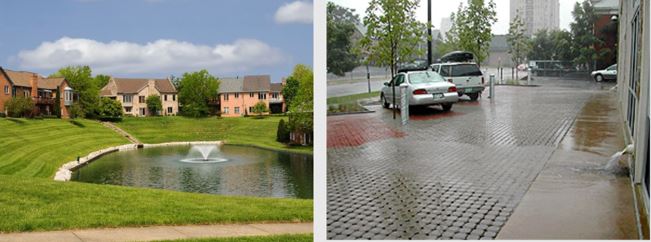
The use of permeable surfaces and pavements allows a portion of runoff to infiltrate into the ground. Permeable asphalt and permeable paving systems are among the measures that can reduce the volume of runoff entering the drainage network.
3. Temporary Runoff Storage and Control
Under this approach, runoff is retained in ponds or storage areas and then gradually released or reused for suitable purposes. Detention and retention ponds are among the principal measures in this category.
Project Objectives
- Identifying the challenges associated with conventional urban drainage systems;
- Examining the effects of urban development on runoff volume, discharge, and quality;
- Reducing peak discharge and the risk of urban flooding;
- Evaluating source-control measures for stormwater management;
- Assessing the feasibility of using permeable surfaces;
- Evaluating runoff storage and detention options;
- Contributing to the restoration of natural drainage patterns;
- Developing a framework for resilient urban stormwater management in Western Tehran.